Caucasian Mujahideen claim operation against ‘Nevsky Express’

•03/12/2009 • Leave a Comment

With an opening statement of “Caucasian Mujahideen reported successful sabotage operation against the ‘Nevsky Express’,” the Chechen Muslim rebels have claimed responsibility for the successful attack on a Russian train.

On the Chechen news website, kavkazcenter.com, a letter was published from the command of the Caucasian Mujahideen stating the goal of the operation had been to destroy the Nevsky Express and kill all those aboard. More chilling was the letter’s claim that the Nevsky blast was only one of many operations the group has planned to unleash on strategic targets across Russia.

The Nevsky Express is often used by government officials and businesspersons traveling between Moscow and Saint Petersburg and the letter acknowledged that the goal was to inflict damage upon as many officials as possible.

Just a couple of days before the destruction of “Nevsky Express” another Russian train in the Caucasian region was blown up and although there were many injuries, no one died in that explosion.  

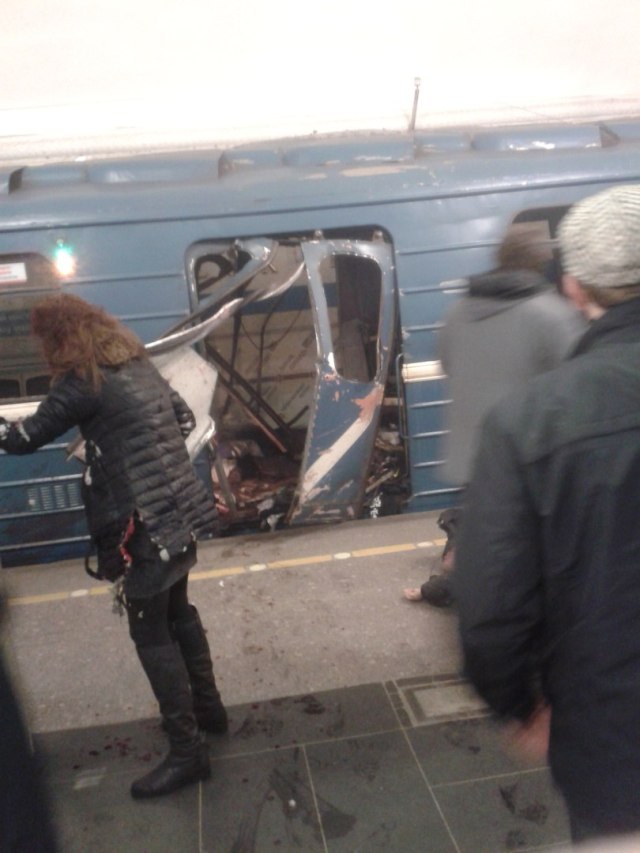
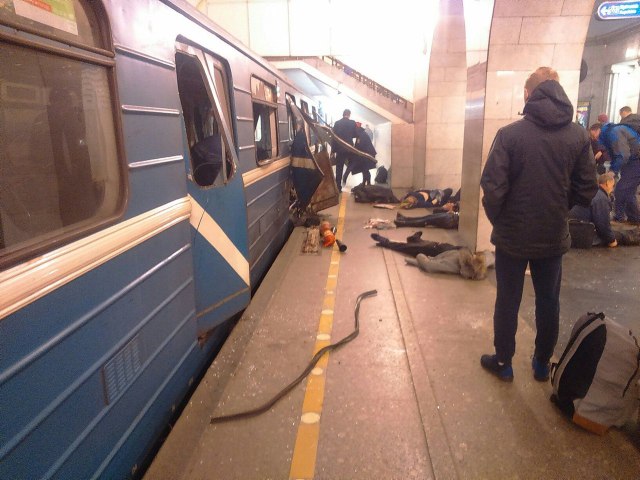
The Kavkaz Center website claimed to have published the letter without any cuts or corrections. On 27 November an explosion derailed the “Nevsky Express” train with several carriages destroyed, over 30 people killed and at least 80 people injured.

Kremlin version of road rage

•02/12/2009 • Leave a Comment

(From the New York Times)

MOSCOW — Every society has a breaking point. In Boston it was the tea tax; in France it was Marie Antoinette’s wigs. If you’re curious where the breaking point may lie in Russia, try slamming the door as you get out of a taxicab — even the most rickety Soviet-era Lada. What will pass across the driver’s face is an expression of such exquisite suffering that you will first apologize and then run. Russians love their cars.

болт вам а не пошлины = Your bolt (car), instead of duties.

In the Soviet period, people were so maniacally protective that they locked their cars away from October until April while the roads were covered with salt. Drivers arriving home for the night would take their windshield wipers, spare tires and side mirrors inside with them, and some zealots were said to leave boards spiked with nails on the driver’s seat as a prophylactic against theft.

To this day, Russians will quietly tolerate hunger and repression, but it’s a bad idea to get between them and their cars. And the Kremlin apparently knows it. On Nov. 17, after an outcry from motorists, President Dmitri A. Medvedev intervened to block a bill that would have doubled taxes on car owners — a stinging humiliation for Russia’s ruling party, United Russia, which had approved it unanimously the previous Friday. Something almost unheard of had penetrated the membrane of Russian politics: the demands of its citizens.

“When motorists gather for a meeting, they don’t come out with political slogans,” said Kirill Formanchuk, 26, a lawyer in the city of Yekaterinburg who launched a local campaign against corrupt traffic police. “We have no ideology. It’s a revolt of people who are not satisfied — not for political reasons, not because our salaries have not been paid — but because something sacred has been taken from us, our car.”

He knows firsthand that Russia’s motorists are willing to stick their necks out. A few years ago, Mr. Formanchuk began protesting every time he was asked for a bribe, interrogating officers and filing formal complaints about each incident. In 2007, he went into a police station to register his car and was beaten so badly that he was hospitalized with brain and skull injuries.

What happened then is the surprise: Motorists’ groups held demonstrations in Moscow, St. Petersburg and Yekaterinburg. The protests were so widespread that they were covered by state-controlled television networks; a newscaster called the treatment of Mr. Formanchuk “outrageous.”

Another rare outburst occurred in 2005, when a 36-year-old railroad worker, Oleg Shcherbinsky, was hit by the governor of Altai’s car as it tried to pass him at high speed while he was making a left turn. The governor was killed, and Mr. Shcherbinsky was sentenced to four years in a labor colony for failing to make way for the official.

His sentence prompted huge protests, and motorists across Russia flew white ribbons in solidarity. The chorus of condemnation grew so loud that United Russia reversed its position and denounced the verdict. An appeals court released Mr. Shcherbinsky after 48 days in jail.

It may be, as one Russian commentator has suggested, that motorists are playing the role in Russia’s civic development that was expected to fall to entrepreneurs and small businessmen. Yuri Gladysh, writing for the opposition Web site kasparov.ru, said the “army of car owners” has enough muscle and organization to alarm Russian officials.

“For a car, a Russian will simply bite through the throat of a passer-by,” he wrote this month. “I know plenty of shop owners who in their hearts are prepared, if the state takes their business away, to return to some office job, with their Soviet-era diploma. But I don’t know a single motorist who would silently agree to the infringement of his rights.”

Not everyone saw the transport-tax reversal as the result of grass-roots democracy. Though motorists’ groups held protests against the proposed tax increase, including a five-minute “horn of wrath,” the actions passed virtually unnoticed in the capital.

Some Kremlin-watchers interpreted the reversal as a purely political move, signaling that Mr. Medvedev seeks to challenge the authority of Prime Minister Vladimir V. Putin, or United Russia, which Mr. Putin heads. Others said both Mr. Putin and Mr. Medvedev were worried that the tax hike would damage their approval ratings — a touchy subject after October, when criticism of local elections sent their ratings into a brief but steep swoon.

But it would certainly not be unprecedented if angry motorists rattled the Kremlin. Last December, thousands of motorists and car dealers in the Far East took to the streets to protest tariffs on imported cars, amid concerns that the economic crisis would spark social unrest throughout the country. Officials in Moscow were so nervous that they sent riot police all the way from the capital to Vladivostok, a nine-hour flight, to break up a rally.

One reason the motorists may worry Moscow is that they are, mostly, young people. Pensioners demonstrate regularly over their meager benefits. But their events have a calcified feel to them: shabby coats and cheap polyester suits, 70-year-old slogans shouted out of a tinny megaphone. The automobile lobby, by contrast, defies ideological labels. It is also growing: Russians now own 34.6 million cars, three to four times more than at the end of Communism in 1991, experts estimate.

Yuri Geyko, who covers automotive issues for the opposition newspaper Novaya Gazeta, recalls his deepening awe as he watched thousands gathering to protest the Shcherbinsky verdict. He had helped promote the event, but not until that moment did he recognize the audience he was talking to.

“My biggest shock was that these people were not poor,” said Mr. Geyko. “This was the middle class. These people, they did not go out into the street because they have nothing to eat. They went out into the street because they have a future.”

Terror in Russia: is there more to come?

•30/11/2009 • Leave a Comment

So far no group has claimed responsibility, an oddity in the world of terrorism, a gnawing suspicion, and God we hope to be wrong, is that this will be a pretext to a new wave of escalations in the ongoing but under-reported war with Chechnya’s separatists.

Last night the Prosecutors Office indicated that the terrorists had “left a lot of evidence at the scene.” Russian prosecutors have the right to hold that evidence under wraps until they have gathered all they can without coming to premature conclusions or to bolster their legitimate case.

This government of Vladimir Putin however has in the past shown an unusual willingness to both manufacture evidence to fit a desired outcome, or to suppress evidence if it doesn’t fit the desired conclusion. That bothers a great many national and international journalists who are watching this with great interest.

Russia is not actively involved in America’s war inside Iraq nor an outspoken partner against any other rogue state normally involved with terrorist actions. Except Chechnya. Russian Interior ministry today conducts almost unrestricted raids in Chechnya and has the situation pretty much balanced militarily in Russia’s favour.

British journalist Lindsey Hilsum among others has argured that the Russian hard line in Chechnya is breeding terrorists. Could this be a result?

Today the Christian Science Monitor reported that another bomb went off early this morning in the southern republic of Dagestan, striking an international train traveling from Tyumen, in Siberia, to Baku in Azerbaijan. No one was injured in that blast, but some analysts say there are clear signs that terrorists, who have never ceased operations amid turbulent Caucasus republics like Dagestan, Ingushetia, and Chechnya, may be preparing to resume more ambitious attacks upon Russia.

“This is a grave challenge for our people,” he said. “A crime, in which any one of us could be the victim, has been committed for effect. Everyone living in Russia is being intimidated.”

“Whoever did it chose the target very carefully and intended to attack the Russian elite,” says Nikolai Petrov, an expert with the Carnegie Center in Moscow. “This train, especially on a Friday, carries a lot of officials who are traveling between Russia’s two capitals, Moscow and St. Petersburg. It’s no surprise that at least two heads of government agencies were among the victims. It was clearly done to attract maximum political and media attention, and it obviously worked,” he says.

Over the spring and summer of 2006, Russia suffered a wave of terrorist attacks, most of them carried out by suicide bombers, including women. The attacks – at a rock concert in Moscow, a bus stop and military hospital in Mozdok and government buildings in Chechnya – killed more than 250 people.

There was a similar attack on the Nevsky Express in 2007 when a similar bomb caused minor injuries to about 60 people but failed to derail the train. In retrospect, just as the first attacks on New York’s World Trade Center bombers learned lessons from earlier failures, Russia’s attackers Friday may have learned from the previous attempt.

Until lately, the most adventurous Russian Islamists tended to head for Afghanistan, or somewhere else, to wage jihad. More recently however the attacks have been concentrated in the Caucausus area and now the sign are that Russia must worry about terror spreading in unexpected places all over the Federation.

Mourners light candles for the departed at Moscow's Cathedral of Christ the Saviour.

For now television networks have taken entertainment programs off the air, moments of silence were observed before matches on the final Sunday of the Russian football league, and mourners lined up outside Moscow’s Cathedral of Christ the Saviour to light candles and say prayers for the departed and those injured.

Dealing with the aftermath of a deadly crash

•30/11/2009 • Leave a Comment

Sunday saw a stead stream of shocked families from Moscow and St. Petersburg who arrived at Tver city morgue where the bodies have been collected of those who were killed in Friday’s deadly train bombing.  

Valentina G. Dybina went to identify her 41-year-old cousin, one of 25 people killed in the bombing of a luxury train on Friday night, but she was so flustered by the bodies and body fragments shown to her that she walked out, planning to return later in the day when the number of corpses would be smaller.

On man, Renat Urusov, 24, said his brother-in-law’s body was intact — but somehow, the man who was sitting next to him stood up and walked away from the crash. “He took the train because he was afraid of flying,” said Mr. Urusov, who had driven some 500 miles trying to locate his brother-in-law in rural hospitals.

A day after the authorities determined that the crash was caused by a homemade bomb on the tracks, relatives had identified the bodies of nearly all the victims at the morgue in Tver, a regional capital midway between Moscow and the crash site.

The attack on the Russian Nevsky Express train was the deadliest in years outside the volatile Caucasus region and was certain to fuel fears of an upsurge of terror in Russia’s heartland.

Trains have often been targets: 30 people were injured in a blast that wrecked a train on the same stretch of line in 2007, an attack blamed on Pavel Kosolapov, a former soldier and associate of the late Chechen rebel leader Shamil Basayev. He is still on the run.

An explosion in a toilet on a Moscow to St Petersburg train in 1997 killed five people. At least 12 people were injured in 2005, when a bomb derailed a train heading from Chechnya to Moscow. A suicide bomb attack on a commuter train near Chechnya killed 44 people in 2003.

The metro and tramway systems in Moscow have also been targeted by Chechen rebels who complain of fierce oppression, including torture and summary executions, by forces from Moscow.

No leads in murder of Moscow priest

•29/11/2009 • Leave a Comment

The gunman walked into St Thomas Church in southern Moscow, asked priest Daniil Sysoyev his name and then opened fire, investigators said.

The father of the slain Orthodox priest Daniil Sysoyev, Alexei (C), comforts a woman during funeral ceremony at a Moscow cemetery, 23 November.

The church’s choirmaster was also injured in the attack. A police spokesman said they believed the gunman had “religious motives”. Reports said Father Sysoyev, 35, had received threats via e-mail.

Russian media said he had been involved in missionary activities aimed at encouraging young people to choose the Orthodox Church. A statement on the website of Father Sysoyev’s missionary training center said he had been threatened by Muslims, AFP reported.

Father Sysoyev’s father is also an Orthodox priest.

(May God in His holy mercy grant blessed repose and eternal memory to Father Sysoyev. Amen)

Officials confirm train crash an act of terror

•28/11/2009 • Leave a Comment

As passengers continued to arrive at the Saint Petersburg Moskovsky train station early Saturday Russian officials had already opened a terrorism investigation into the cause of the deadly crash. Investigators said that remains of the explosive device were found at the site.

On Friday evening the Russian train “Nevsky Express” carrying hundreds of passengers from Moscow to St. Petersburg derailed after an explosion, killing and injuring dozens of passengers. The Russian Prosecutor General’s office listed the death toll at 30, with 60 passengers hospitalized.

Alexander Borotnikov, head of Russia’s Federal Security Service told reporters that an improvised explosive device with roughly 7 kilograms of TNT had detonated when the train passed about half past 9pm on Friday night. A second explosive device partially detonated Saturday during the clear-up operation near the disaster site but there were no reports of additional injuries. 

The Nevsky Express, a high speed train is a popular and upscale train often carrying government officials and business executives and Friday’s derailment was Russia’s deadliest terrorist strike outside the North Caucasus region in years. As of late Saturday, authorities indicated that 18 people were still unaccounted for.

So far no groups have claimed responsibility for the bombing.

Deadly passenger train crash

•27/11/2009 • Leave a Comment

Yesterday’s crash of the Nevsky Express Moscow – St. Petersburg train is looking more and more like a terror attack. Officials at the Directorate of the Russian Prosecution General’s Office in the North-Western Federal District are centering their investigation around a 3-meter wide crater found near a rail bridge. The London Guardian (UK) reported that some witnesses heard a large bang before the crash.

According to a source at police, the railway was exploded by a homemade explosive device with power capacity equivalent to 2 kg of TNT. The bomb was set on the way to a bridge: it looks like the terrorist intended to make the train fall from the bridge, which could have resulted in numerous casualties.

Known as the Nevsky Express, the high speed train carrying hundreds of passengers from Moscow to St. Petersburg derailed late Friday, killing at least 25 people and injuring dozens of others.

The three rear cars of the Nevsky Express went off the tracks in the Tver province northwest of Moscow, the Emergency Situations Ministry said. Russian Railways said that four cars derailed and said 50 people were taken to two hospitals in the area.

The Russian Ministry of Emergency Situations indicated that at least 25 persons had died and over 30 were still trapped in the wreckage. Russian media broadcast live images as ambulances drove in and out of the cordoned-off site.

The Nevsky Express is the fastest of several trains operating between the popular Moscow – St. Petersburg route. The Nevsky is a high speed train equiped exclusively with business class compartments.

More details in this video report…

Russian beauty wins Mrs. World pageant!

•25/11/2009 • Leave a Comment

Mrs. Russia Victoria Radochinskaya, a 28-year-old advertising executive, was crowned Mrs. World 2009 during the pageant finals held Sunday, November 22, 2009, at the Ba Ria-Vung Tau Sport Hall in Vung Tau City, Vietnam.

Named First Runner Up was the candidate from the USA, Andrea Robertson, a professional model while Second Runner Up title went to the host delegate Hoang Thi Yen.

A total of 76 beautiful moms competed for the title. Five hundred million people around the world watched the international broadcast as Russian Victoria Radochinskaya, 28, took honours for the Mrs World contest in Vung Tau city .

In less than a year, three Russian beauty queens scored major international titles for their country: Ksenia Sukhinova (Miss World 2008), Ekaterina Grushanina (Miss Tourism Queen International 2009) and Victoria Radochinskaya as Mrs. World 2009.

For our Russian readers:

Россиянка Виктория Радочинская победила в финале престижного международного конкурса “Миссис мира — 2009″, который прошел вечером в воскресенье, 22 ноября, в южном вьетнамском городе Вунгтау.

В качестве награды 31-летней жительнице Ростова-на-Дону была вручена корона из белого золота, украшенная 63 рубинами, общей стоимостью около 100 тысяч долларов.

Второе и третье места по итогам конкурса жюри присудило представительницам США и Вьетнама. Всего за выход в финал “Миссис мира” боролись представительницы 76 государств и территорий мира.

Конкурс “Миссис мира”, который в этом году прошел в юбилейный 30-й раз, относится к числу главных мероприятий мировой фэшн-индустрии. При этом он представляет собой альтернативу многим другим конкурсам красоты, так как к участию в нем допускаются лишь замужние претендентки.

Нынешняя победительница — ростовчанка Виктория Радочинская — замужем уже девять лет и воспитывает сына Богдана, передает ИТАР-ТАСС.

Beer bad, vodka good!

•25/11/2009 • 1 Comment

It’s been just over a month since President Dmitry Medvedev ordered new restrictions on the sale of beer and similar beverages. The Russian president wants to do battle with Russia’s rampant alcoholism. Naturally of course a lot of questions have been raised about why vodka, Russia’s favourite recreational beverage, wasn’t targeted.

In October President Medvedev decided that it was time to take on Russia’s rampant alcoholism. On the president’s orders the government announced restrictions barring the sale of beer in cans or bottles larger than one-third of a liter. What is curious is that the new rules apply to ‘’light alcohol’’ beverages, but there is no mention of restricting the sales of wine, vodka or other hard liquors.

It’s probably not a secret that Russia is one of the world’s largest per-capita consumers of alcohol. The average Russian drinks 18 liters of alcohol a year.

The Lancet medical journal reported last month alcohol-related diseases caused around half of all deaths of Russians between the ages of 15 and 54 and the World Health Organization has said that Russians drink more than twice the amounts of alcohol of most other developed countries.

Apparently the WHO has never visited Mexico over spring break.

A natural gas deal before winter!

•21/11/2009 • Leave a Comment

Russian News services are reporting that Ukraine and Russia have come to an agreement regarding delivery of natural gas to Europe. Hoping to avoid a re-run of the customary Christmas time and New Year’s Eve gas wars between Russia and Ukraine, today’s agreement is the result of high level meetings in the Crimean seaside resort of Yalta where Russian Prime Minister Vladimir Putin met with Ukrainian Prime Minister Yulia Tymoshenko.

Ukrainian Prime Minister Yulia Tymoshenko

Reporters at the meetings say that Moscow agreed to meet some of Kiev’s requests and that both Prime Minister’s brushed aside threats broadcast earlier by the President of Ukraine yesterday.

“We shall see in the New Year without any problems,” declared Russian PM Putin, clearly a reference to the troubles of last winter when a gas delivery crisis crippled much of Eastern and Central Europe without natural heading gas during some of the coldest weeks of the winter.

MP Putin has apparently promised not to fine Ukraine for importing less gas than required with the current contract, and PM Timoshenko vowed Ukraine would honor its duty to transit Russian gas to Europe as agreed and on time.

Citing slumping industrial production, Ukraine wanted a reduction in the amount of gas in 2010 by 35 percent, from 52 billion cubic meters to 33.75 billion cubic meters, a move which Putin agreed as acceptable.

Mr. Putin went on to say that while fines for reducing consumption of contracted amounts of gas might be standard business procedures, however he disavowed such fines “in view of the special relationship between Russia and Ukraine.”

The two leaders agreed that Ukraine will pay the world market price of gas, and Gazprom will pay in full the Ukrainian transit fee. Mrs. Timoshenko expressed that this will yield multi-billion dollar revenues for Ukraine’s struggling economy.